
No products
- English
- Ελληνικά

About us

All this time we never cared about ...fashion....we preferred to follow classic than plastic.... our items are all handmade ,made by natural materials , and are carefully chosen one by one in their countries of origin usually Nepal and India, though we have things from around the world...
Our items are not the latest fashion ,, but are all unique and all different .The vast majority of our goods are in quantities of 1 item so you will be the only one to have them...
We don’t sell what you really need...
we sell what you really deserve ..
so...Namaste.. and ... Welcome!!!
 View larger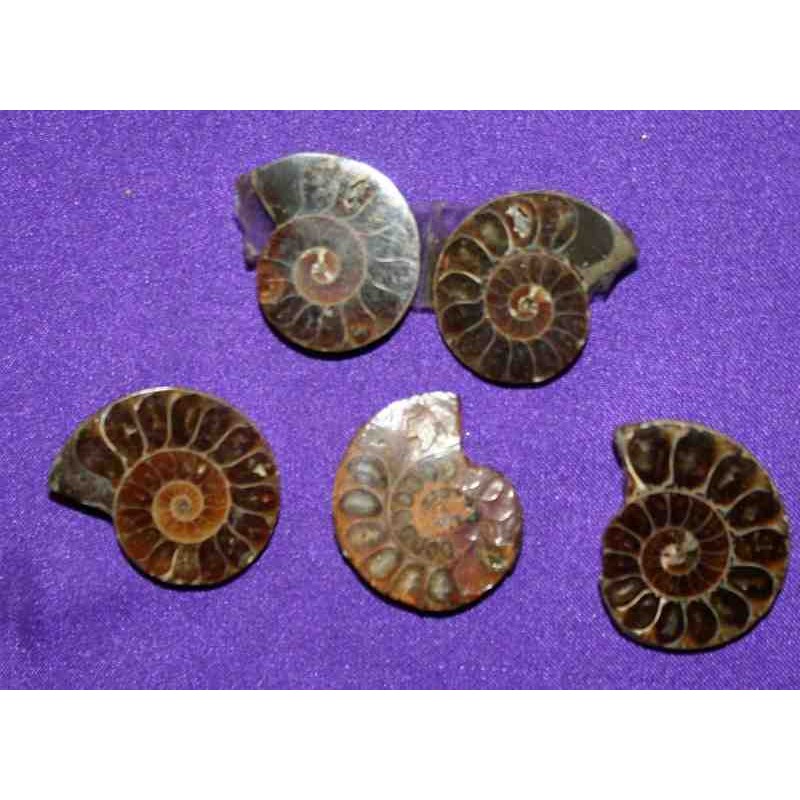
- Remove this product from my favorite's list.
- Add this product to my list of favorites.
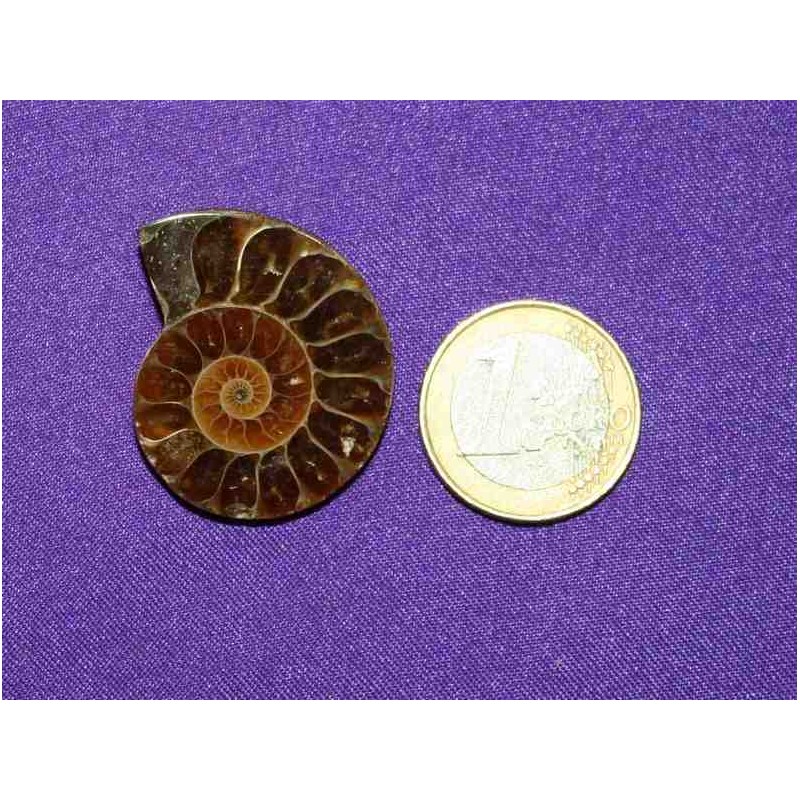
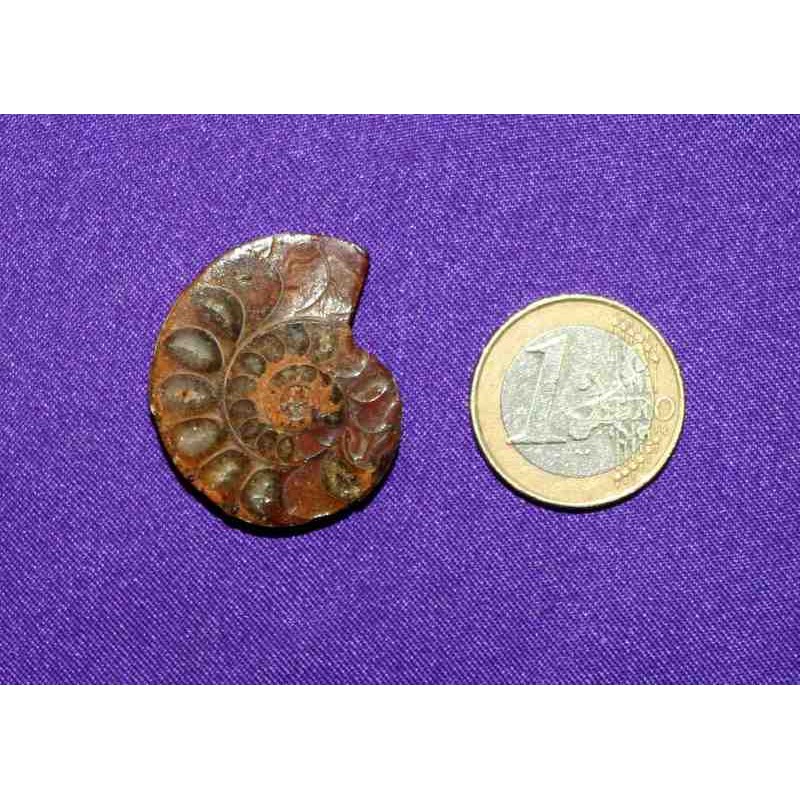
Fossil Ammonite Cabochon
New product
2 Items
Warning: Last items in stock!
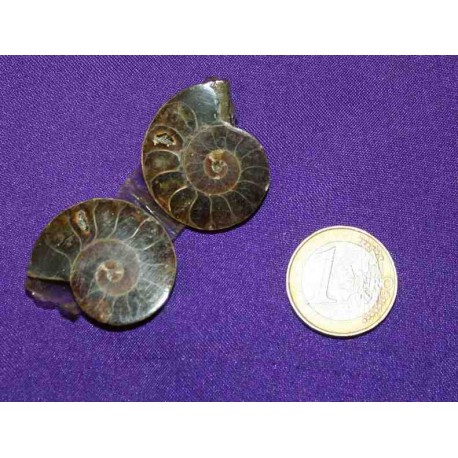
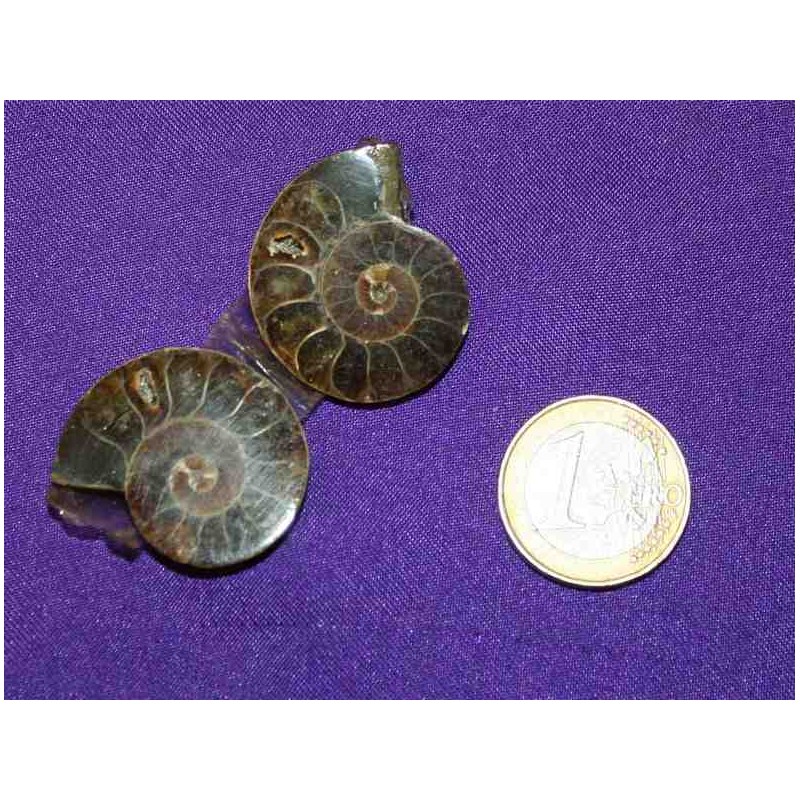
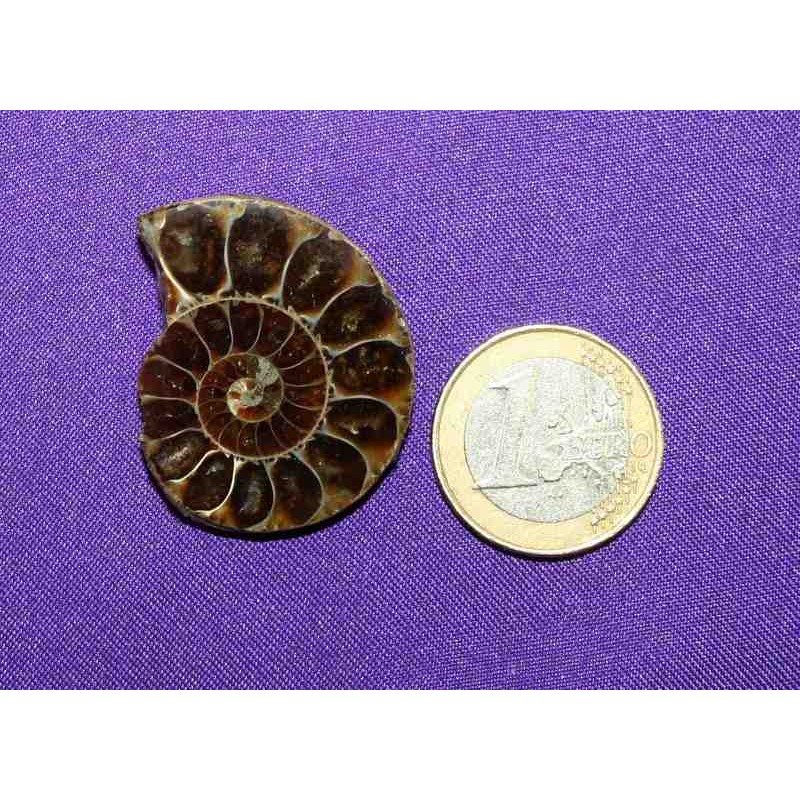
Ammonite Fossil Cabochon
Dim.
1. = 2 pcs ( I pair ) aprox 3cm x 2.7 cm total weight 15.46 gr
2. = 1pc 3.4 cm x 3 cm 10.88 gr
3. = 3.5 cm x 2.9 cm 10.88 gr
4. = 3.1 cm x 2.8 cm 9.12 gr
Ammonite activates metaphysical powers and inter-dimensional exploration. Ammonite is particularly effective when placed on the third eye chakra. It represents coming full circle and knowing a place for the first time. Ammonite has the souls path encoded within it and it a useful support for rebirthing.
The Ammonite draws off all negative energies. Think of the Ammonite spirals as a filter, drawing in these dense energies which are no longer needed, moving them through the spirals and releasing them as fresh, positive, loving life force energies.
Physically, Ammonites can help to increase stamina and vitality. Use Ammonites when working with issues of blood pressure or problems with the ears, lungs and degenerative disorders. Ammonites will also help to lift the heaviness that is sometimes felt during depression.Ammonoids are an extinct group of marine mollusc animals in the subclass Ammonoidea of the class Cephalopoda. These molluscs are more closely related to living coleoids (i.e., octopuses, squid, and cuttlefish) than they are to shelled nautiloidssuch as the living Nautilus species. The earliest ammonites appear during the Devonian, and the last species died out during the Cretaceous–Paleogene extinction event.
Ammonites are excellent index fossils, and it is often possible to link the rock layer in which a particular species or genus is found to specific geologic time periods. Their fossil shells usually take the form of planispirals, although there were some helically spiraled and nonspiraled forms (known as heteromorphs).
The name "ammonite", from which the scientific term is derived, was inspired by the spiral shape of their fossilized shells, which somewhat resemble tightly coiled rams' horns. Pliny the Elder (d. 79 AD near Pompeii) called fossils of these animalsammonis cornua ("horns of Ammon") because the Egyptian god Ammon (Amun) was typically depicted wearing ram's horns.[1] Often the name of an ammonite genus ends in -ceras, which is Greek (κέρας) for "horn".