
No products
- English
- Ελληνικά

About us

All this time we never cared about ...fashion....we preferred to follow classic than plastic.... our items are all handmade ,made by natural materials , and are carefully chosen one by one in their countries of origin usually Nepal and India, though we have things from around the world...
Our items are not the latest fashion ,, but are all unique and all different .The vast majority of our goods are in quantities of 1 item so you will be the only one to have them...
We don’t sell what you really need...
we sell what you really deserve ..
so...Namaste.. and ... Welcome!!!
 View larger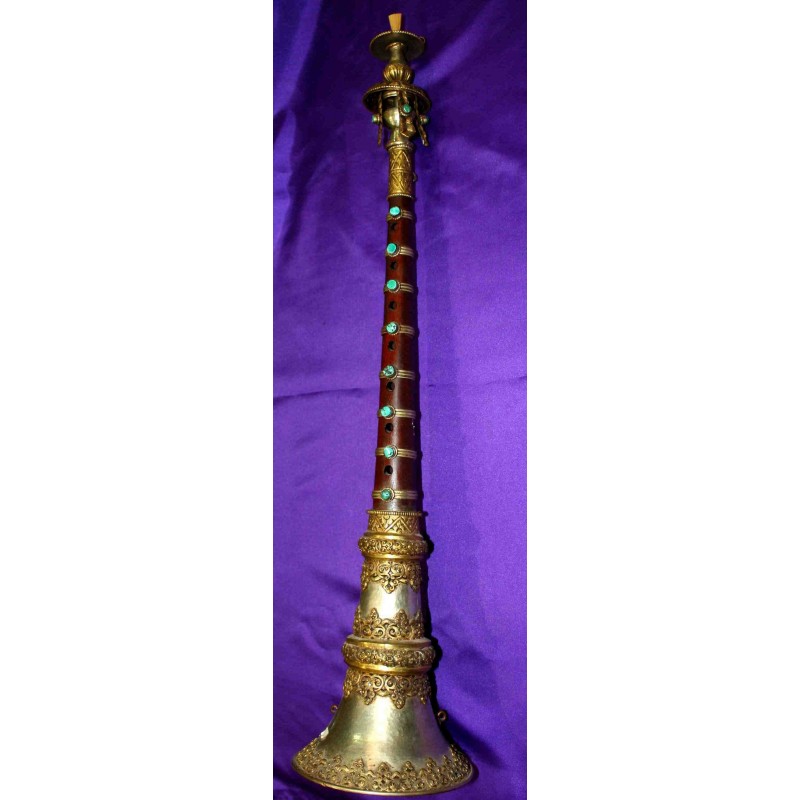
- Remove this product from my favorite's list.
- Add this product to my list of favorites.
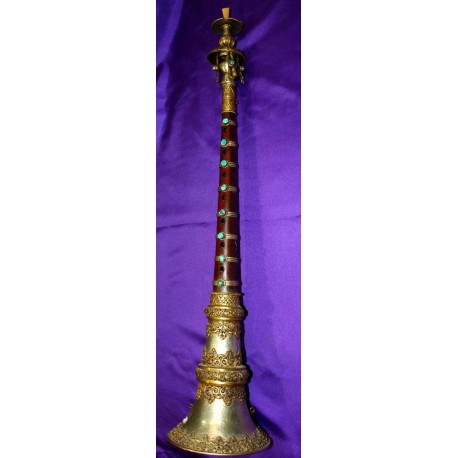
Ceremonial Trumpet Gyaling from Nepal
New product
1 Item
Warning: Last items in stock!
Height 65 cm weight 700gr
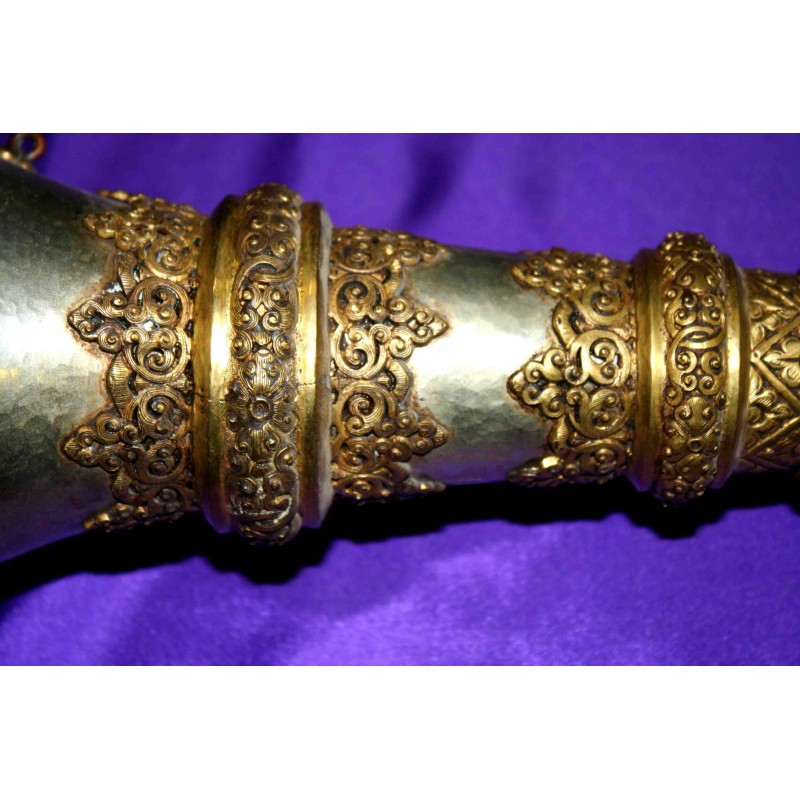
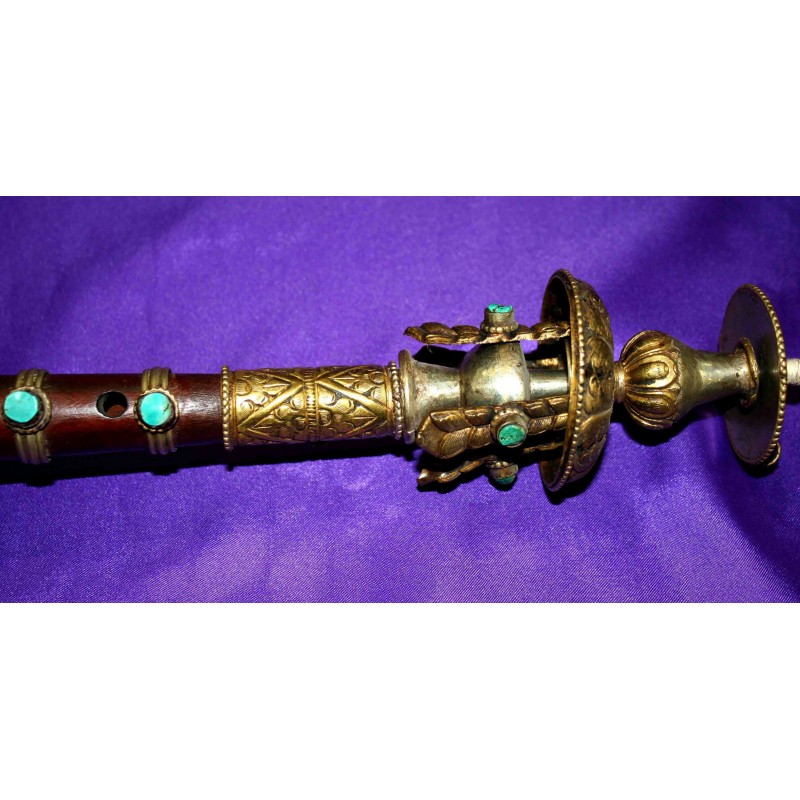
Ceremonial Trumpet from Nepal . Made of Wood and Brass , with wonderful carvings on the metal parts , and decorated with turquoise semiprecious stones
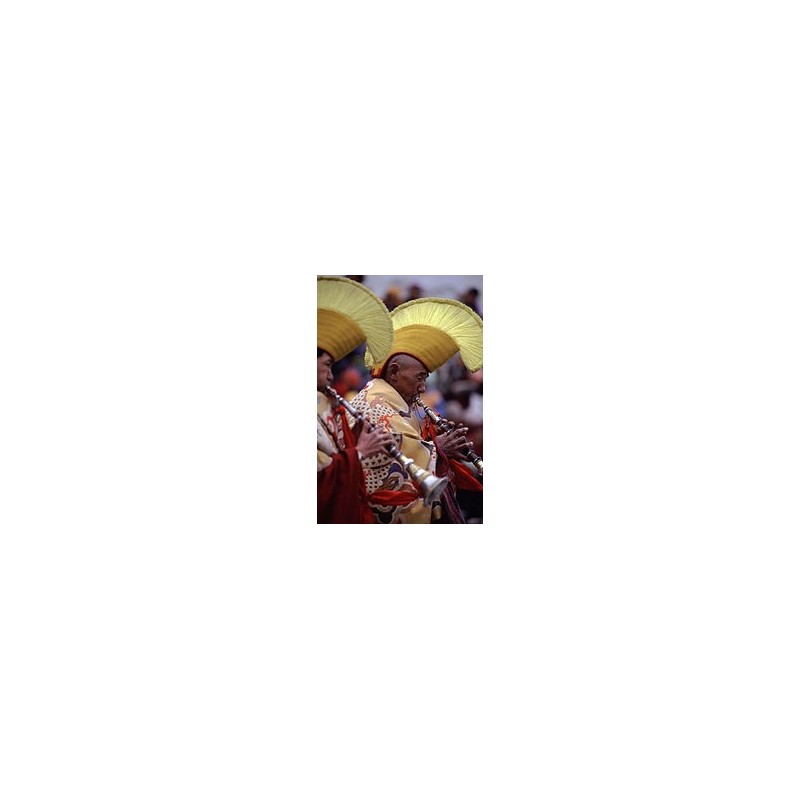
The gyaling (also spelled gya ling, gya-ling, jahlin, jah-lin, jahling, jah-ling, Rgya-gling etc.) Gyaling literally meaning "Indian trumpet" is a traditional woodwind instrument used in Tibet. Specifically, it is a double reed horn much like the sorna used mainly in Tibetan monasteries during puja (chanting and prayer) and is associated with peaceful deities and the idea of devotion.
The gyaling is oboe-like in appearance with a long hardwood body and copper brass bell. The instrument is generally covered with ornate embellishments of colored glass. The double reed, which is made from a single stem of marsh grass, is placed upon a small metal channel that protrudes out of the top.There are eight (8) fingerholes on a standard gyaling.
To play a gyaling requires a technique called circular breathing, in which the instrument will constantly be emitting a linear sound, even while the musician inhales. The reed is fully submerged in the player’s mouth but does not touch it; the lips are pressed against the flat metal channel below the reed. A gyaling player tunes the instrument with the breath. The way of playing a gyaling varies depending on the lineage and ritual.